Results from Our Partner Network: Urban Innovations and Community-Based Solutions for Cleaner Air in Budapest
Improving air quality in large cities requires coordinated action across a range of areas. As part of the LIFE IP HungAIRy project, the Municipality of Budapest has contributed to protecting air quality through several initiatives, including the development of sustainable urban logistics, support for community composting, and the promotion of environmentally friendly transport and heating practices. Activities in Budapest combined practical urban solutions with awareness-raising programmes built around local communities.
Urban Logistics: More Efficient Deliveries, Lower Environmental Impact
With the growing popularity of e-commerce, urban parcel delivery is playing an increasingly important role. The vehicle traffic associated with home deliveries can contribute to air pollution, noise and traffic congestion. One of the aims of the LIFE IP HungAIRy project's pilot interventions in Budapest was therefore to make urban freight transport more efficient and environmentally friendly.
In cooperation with logistics service providers, the Municipality of Budapest developed and tested several solutions. One of these was the LOGI point established in City Hall Park, where parcels from several courier companies can be collected at a single location. Such shared parcel collection points can help reduce vehicle traffic and emissions associated with home deliveries. As part of the development, a visual identity matching the Municipality's branding was also created to make the LOGI point easily recognisable.
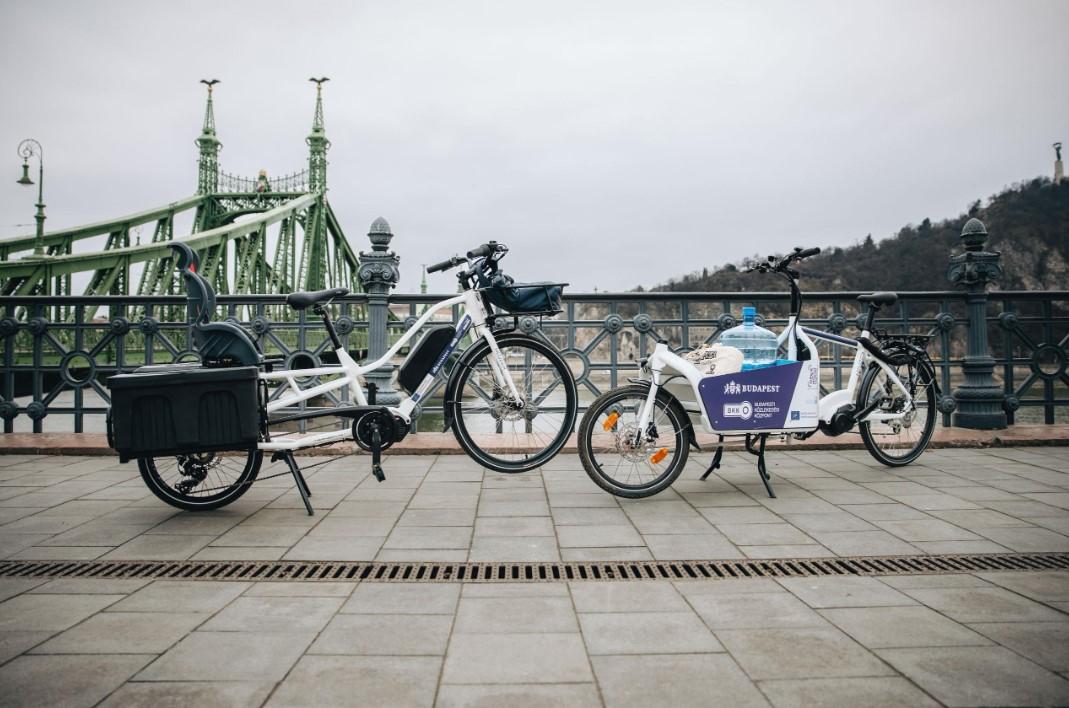
Another element of the pilot project involved preparations for a city logistics distribution centre, known as a LOGI hub. Under this concept, parcels arriving in the city centre would be delivered to their final destinations from a central hub using cargo bikes or smaller, environmentally friendly vehicles. Preparations also began for a digital loading bay reservation system, which could help make more efficient use of loading spaces and reduce congestion caused by illegal stopping and parking.
These developments aim to create the conditions for more sustainable urban freight transport. Their environmental impact will depend on the extent to which the solutions are adopted and transport practices change. In the longer term, they could help reduce the pressure of traffic on the city centre.
Community Composting: Local Cooperation to Reduce Waste
The project also supported the spread of environmentally conscious lifestyles by promoting community composting. In autumn 2022, new composting sites were established in several locations, including Tabán, Pünkösdfürdő Park, Boráros Square, as well as Budapest's 17th and 18th districts.
During the project period, compost distribution events and awareness-raising workshops were organised to help participants learn about proper composting practices. Based on operational experience, compost bins were relocated from some less frequently used sites to communities where demand was greater. New composting sites were also established following local initiatives.
Currently, eight community composting sites are operating within the framework of the project, with a total of twenty compost bins. Active local communities are responsible for maintaining these sites, which is an important condition for the long-term success of the initiative.
"Don't Burn!" – Raising Awareness for Cleaner Air
Improper domestic heating practices can cause significant air pollution, which is why information and awareness-raising play an important role in protecting air quality. This is the aim of the "Don't Burn!" campaign, launched in 2021, which focuses on reducing improper heating practices and increasing public awareness.
In 2025, the campaign continued under the title "Don't Burn! – Clean Air Is Our Common Treasure". Its messages appeared in 22 printed publications, with a total circulation of more than 600,000 copies. In addition to online communication and social media, videos produced in collaboration with influencers helped raise awareness, reaching more than 135,000 views in total.
The campaign was further supported by 161 radio spots, radio interviews and press coverage. Its communication activities addressed residents of Budapest and the surrounding metropolitan area alike, highlighting environmentally friendly heating practices and the health impacts of air pollution.
Sustainable Mobility: Cycling and Public Transport
The LIFE IP HungAIRy project's awareness-raising activities in Budapest also promoted sustainable modes of transport. The city took part in European Mobility Week every year, organising professional discussions and thematic events. Topics included the social aspects of transport, women's mobility needs and the importance of covered bicycle parking facilities.
During Car-Free Weekend, the Green Budapest tent welcomed visitors with interactive games, questionnaires and awareness-raising activities. The event attracted nearly 1,000 visitors each year.
In autumn 2026, these activities were complemented by a large-scale B+R (Bike and Ride) campaign. The initiative promotes combining cycling with public transport and highlights the benefits of connecting bicycle parking facilities with public transport services. Communication activities across online and offline channels aim to encourage more people to choose these sustainable modes of transport for their everyday journeys.
The initiatives in Budapest demonstrate that protecting air quality requires action across several areas of urban life at the same time. The development of logistics solutions, the involvement of local communities and public awareness-raising can all contribute to making Budapest a more sustainable and liveable city in the long term.


