Results from Our Partner Network: Using Data and Raising Awareness for Cleaner Air in Szolnok
Improving air quality requires identifying the sources of air pollution, making transport more efficient and raising environmental awareness. As part of the LIFE IP HungAIRy project, Szolnok is implementing a range of developments that support transport planning through real-time traffic data, expand monitoring capabilities with new air quality and meteorological sensors, and promote environmental awareness among residents. These technical developments are complemented by the educational and awareness-raising activities of Eco-Managers in schools and local communities.
Using Data to Improve Traffic Management
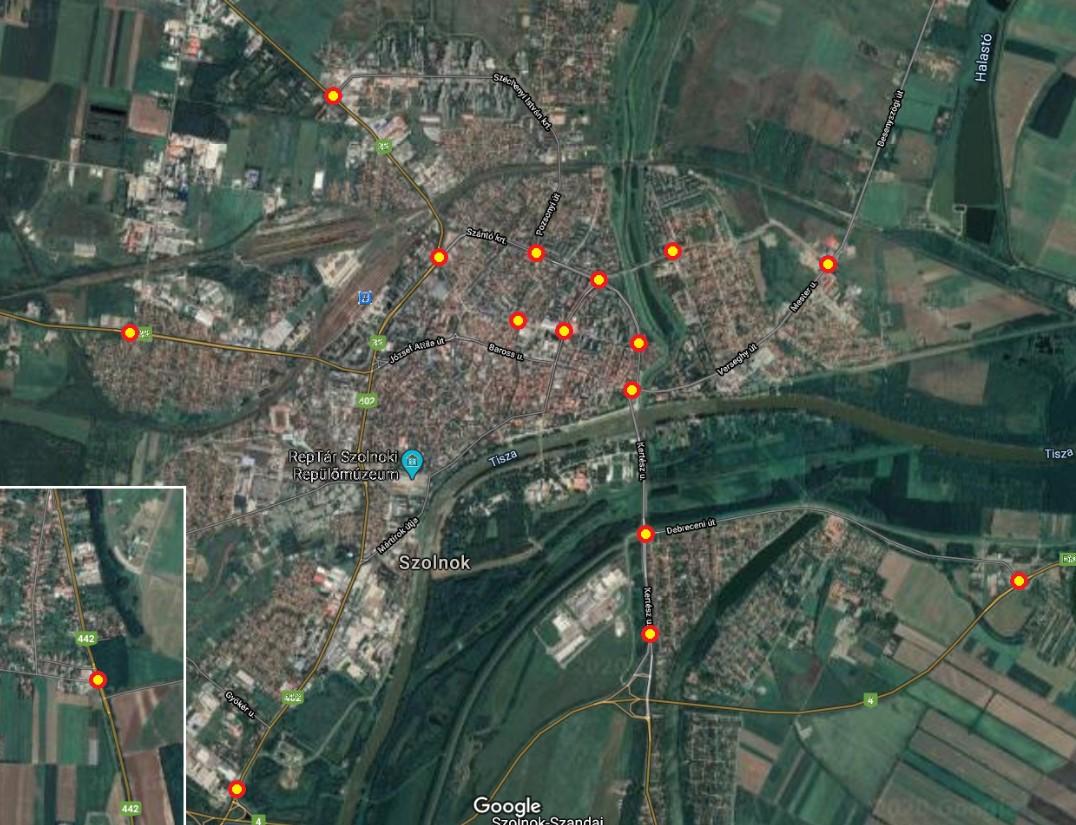
The development of an intelligent transport system has begun in Szolnok as part of the LIFE IP HungAIRy project. One of its key elements is an automatic traffic counting system installed at major intersections and on important road sections across the city.
The system operates at 17 locations, collecting traffic data using optical and infrared sensors and transmitting the information via mobile networks. The measurements provide real-time information on traffic conditions. At four road sections, traffic congestion detection and forecasting also help identify problematic areas and traffic bottlenecks.
The analysis and modelling of the collected data support more efficient traffic management. They provide a sound basis for decisions on traffic light settings, changes to traffic regulations and the planning of road intersections. Traffic data collected previously are already being used to prepare developments to the city's transport infrastructure.
Monitoring Changes in Air Quality
In addition to traffic data, understanding air pollution levels and the factors influencing them is essential for planning appropriate measures. Under the HungAIRy project, several new automatic air quality and meteorological monitoring stations are planned for installation in Szolnok by the end of 2026.
The stations will measure different size fractions of particulate matter (commonly known as dust), nitrogen dioxide concentrations and various meteorological parameters. The planned locations include Tallinn, Szandaszőlős, Pletykafalu, the Southern District and the Széchenyi District. Sensors installed at municipal institutions will provide data from several parts of the city, complementing the existing monitoring locations of the National Air Quality Monitoring Network (OLM).
The monitoring data will help identify spatial differences in air quality and assess air pollution from transport, domestic, industrial and agricultural sources. In the longer term, this information can also provide a sound basis for municipal measures aimed at reducing air pollution.
Raising Awareness in Schools and Local Communities
Alongside technological developments, raising environmental awareness among residents is another important part of the HungAIRy project's activities in Szolnok. The city has joined the project's Eco-Manager Network, whose members promote sustainable lifestyles through educational activities in schools and programmes organised at various local events.
Through their school presentations and sessions, the Eco-Managers have reached more than 3,000 primary school pupils. Topics covered include energy efficiency, composting, environmentally friendly solid fuel heating and sustainability.
Awareness-raising activities also feature at events held in the city and surrounding settlements. These programmes give residents the opportunity to gain practical knowledge about environmental protection and understand how everyday decisions can contribute to preserving air quality.
The collection of traffic data, improvements to air quality monitoring and awareness-raising activities complement one another in supporting efforts to achieve cleaner air in Szolnok. The monitoring and analysis capabilities developed through the project can also contribute to well-informed urban decision-making in the future, while the work of the Eco-Managers helps promote environmentally conscious attitudes among a wider section of the population.


