Results from Our Partner Network: A Chimney-Free City Centre – BKM’s Contribution to Cleaner Air in Budapest
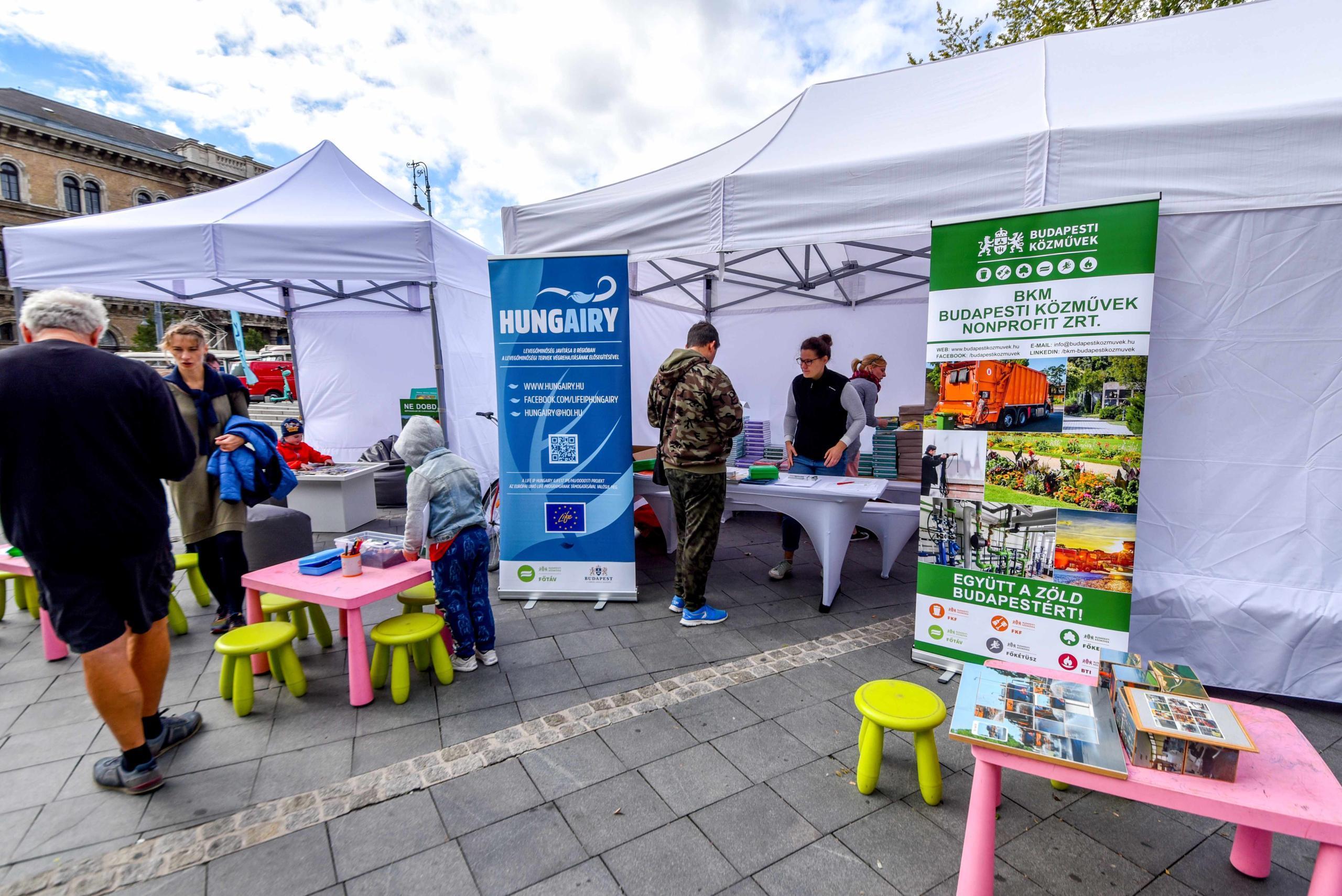
To improve Budapest’s air quality and support more energy-efficient urban operations, BKM Nonprofit Plc. – together with its predecessor, FŐTÁV – has implemented a range of developments in recent years that contribute to a more sustainable capital city. Within the framework of the LIFE IP HungAIRy project, plans and investments have been carried out covering the expansion of the district heating network in Budapest’s city centre, the utilisation of geothermal energy, and the development of smart metering solutions.
As the capital’s leading district heating service provider, BKM supplies heating and domestic hot water to nearly 245,000 residential customers and several thousand institutional users across 19 districts of Budapest. Its activities within the project demonstrate how modern district heating can play a key role in reducing urban air pollution.
A Chimney-Free City Centre for Cleaner Air
One of the project's flagship initiatives was the preparation of the Chimney-Free City Centre development plan, which assessed the opportunities for expanding district heating services in Budapest’s central districts. Completed at the end of 2019, the study aimed to support the wider adoption of environmentally friendly district heating in line with Hungary’s national energy strategy.
The assessment included a detailed analysis of buildings’ heat demand, connection costs, and the potential for reducing emissions. The results showed that switching to district heating could significantly reduce emissions of both air pollutants and greenhouse gases. This would not only improve air quality in the city centre but also contribute to achieving climate protection objectives.
As a result of the project, construction of a new transmission pipeline crossing the Elizabeth Bridge, together with the associated transmission and distribution pipeline sections, marked the beginning of district heating supply to Budapest’s city centre. To date, a total of 2,065 route metres of new paired district heating pipelines have been installed, enabling the connection of more than 13 MW of new consumer capacity.
The completed developments are expected to save nearly 28,700 GJ of primary energy annually while reducing greenhouse gas emissions by approximately 1,900 tonnes of CO₂ equivalent each year.
Sustainable Geothermal Heating at Budapest Zoo
Significant developments have also been implemented at the Budapest Zoo and Botanical Garden. BKM currently supplies 26 buildings with geothermal energy by utilising geothermal waste heat provided by Budapest Spas cPlc.
A feasibility study completed in 2021 concluded that the available geothermal heat could also supply additional buildings that are currently heated by natural gas. This could replace approximately 1,816 GJ of natural gas-based energy each year while further reducing greenhouse gas emissions.
Geothermal energy already plays a major role in the Zoo’s energy supply and will also form an important part of the Biodome’s energy system, operating in combination with district heating.
Smart Solutions for More Conscious Energy Use
As part of the LIFE IP HungAIRy project, BKM developed a mobile application that enables customers to monitor their energy consumption. The system provides users with a clearer overview of their energy use, helping them make more informed decisions about their consumption habits. The application is currently being introduced and is expected to become available to an increasing number of users in the near future.
Under forthcoming regulatory changes, the use of heat cost allocators in district-heated apartment buildings will become mandatory from 2027, which is expected to accelerate the wider adoption of smart metering solutions.
To support this transition, BKM is also conducting an information campaign promoting smart metering technologies and more conscious energy use.
A Long-Term Vision for a Cleaner, More Liveable Budapest
The developments implemented through the project clearly demonstrate the close connection between improving air quality and increasing energy efficiency. Expanding the district heating network, making greater use of geothermal energy, and introducing digital solutions all contribute to making Budapest a more sustainable, healthier, and climate-conscious city.


