Up-to-Date Plans, Well-Informed Decisions – The Review of Air Quality Plans
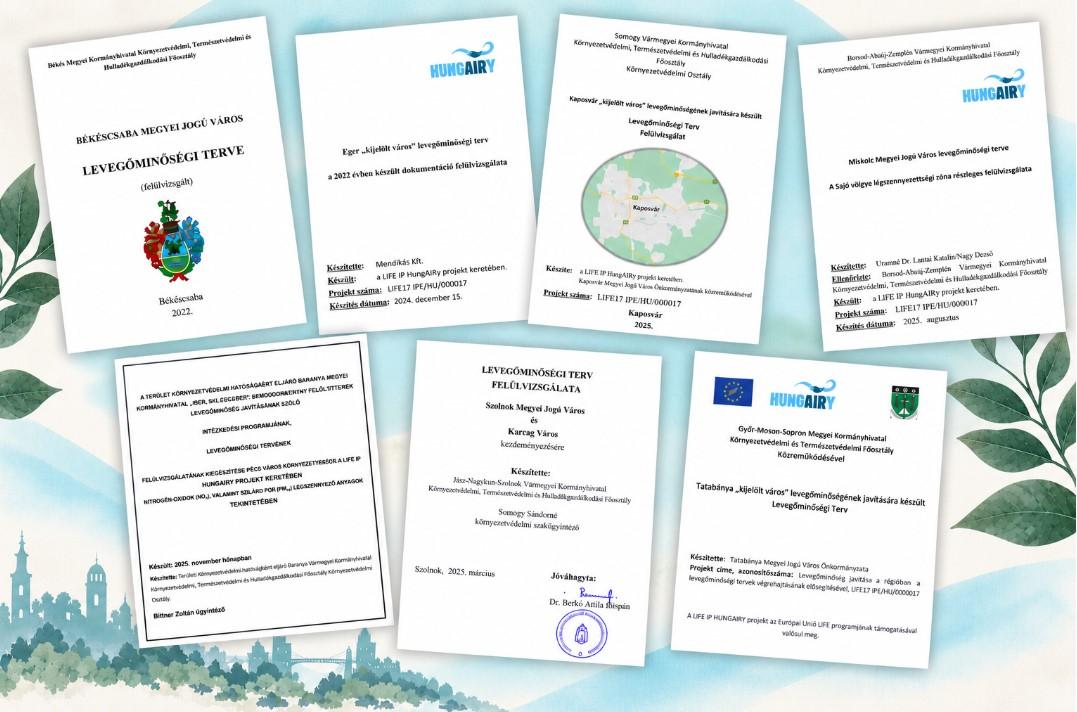
Air Quality Plans
Air quality plans play an important role between national measures and local environmental programmes in efforts to improve air quality. In Hungary, such plans currently cover ten air quality zones. The measures included in these plans aim to improve air quality, reduce air pollution where limit values are exceeded, and preserve favourable air quality conditions where these have already been achieved.
The first air quality action programmes in Hungary were developed in 2004, prior to the country's accession to the European Union. Following the transposition of Directive 2008/50/EC on ambient air quality and cleaner air for Europe into Hungarian legislation, new air quality plans were prepared in 2016, reflecting the updated regulatory framework.
However, preparing air quality plans alone is not enough to ensure their effective implementation. Regular assessments of local air quality data, changes in municipalities and newly introduced measures are also essential.
The Review Process
One of the key objectives of the LIFE IP HungAIRy project, launched in 2019, was to support and establish a regular review process for air quality plans. The ten Hungarian municipalities participating in the project committed to reviewing their air quality plans every two years throughout the project period.
The project supported this process through several tools and activities designed to make the reviews more effective and better grounded. These included the development of ATMO-Plan, an air quality modelling and decision-support application, as well as the installation of new air quality monitoring stations.
During a meeting, the Eco-Managers had the opportunity to learn about the relevant Austrian legal framework and the process of developing the air quality plan for the federal state of Styria. The experience and lessons gained were also put to use in the Hungarian context.
As part of the project, a collection of good practices was compiled on three occasions, presenting examples of measures implemented in Hungary and internationally. In addition, four roundtable discussions on air quality plans were organised with the participation of the competent environmental authorities. These meetings provided an opportunity to assess the experience gained through the review process and jointly identify areas for further improvement.
As a result of the project, the participating municipalities were able to review their air quality plans using a more consistent methodology, up-to-date monitoring data and the ATMO-Plan decision-support application. The experience gained through this process will continue to support well-informed local environmental decision-making in the long term.
The completed air quality plans are published on the website of the competent ministry.